Material Participation Is Not a Vibe — It's an Hours Test You Have to Win
There are seven ways to qualify, but three matter for STR owners—and the popular 100-hour test has a trap that disqualifies well-meaning owners. Part 2 of the §469 Problem Series.
Part 2 of 6 — The §469 Problem Series
In the last post, we landed on an uncomfortable idea: the short-term rental tax strategy is real, but most people can't actually prove the one thing it depends on — material participation. Today we get specific about what that proof requires, because you can't document something you can't define.
The good news: the tests are concrete. The hard news: a couple of them are easier to fail than people realize, and the most popular one has a trap built into it.
There isn't one test — there are seven
The IRS gives several ways to qualify as materially participating in an activity. You only need to meet one of them. For STR owners, three matter most:
The 500-hour test. You participated in the activity for more than 500 hours during the year. Clean and simple — if you can show 500+ hours of genuine work, you qualify, full stop. No comparison to anyone else required.
The "substantially all" test. Your participation was substantially all of the participation in the activity by anyone. This fits the true solo operator who does essentially everything.
The 100-hour test — and the trap. You participated for more than 100 hours, and no other single individual participated more than you. This is the one most STR owners lean on, because 100 hours feels achievable. But read it again: it's not just 100 hours. It's 100 hours and more than anyone else.
That second half is where people get hurt.
The "more than anyone else" trap
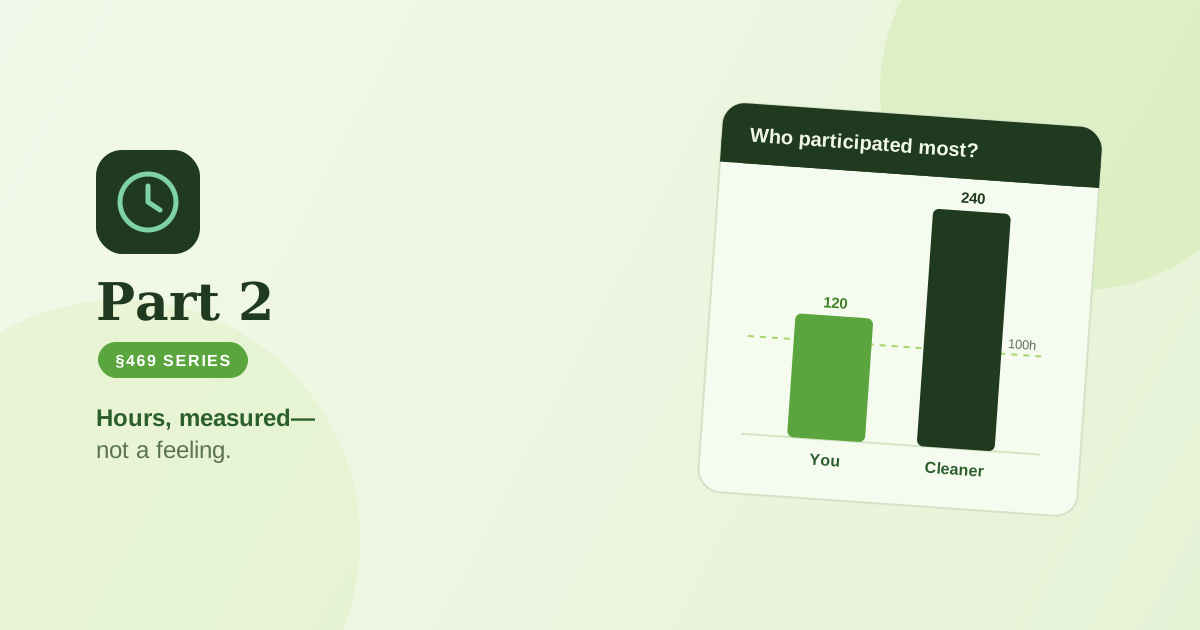
Picture a typical owner-run STR. The owner does the bookings, the pricing, the guest communication, the problem-solving — call it 120 hours over the year. Feels like plenty. They're over 100, so they figure they qualify under the 100-hour test.
Now count the cleaner.
If the property turns over 80 times a year and the cleaning crew spends three hours per turn, that's 240 hours. One individual — or one crew treated as a unit — just participated more than twice as much as the owner. Under the 100-hour test, the owner now fails, because someone else participated more than they did. The 120 hours were real. They just weren't enough to win the comparison.
This is the single most common way a well-meaning, genuinely-involved owner loses the position. They cleared the bar they were watching (100 hours) and walked straight into the one they weren't (more than anyone else).
Why this changes how you have to think
Once you see the trap, two things become obvious.
First, the 500-hour test is safer than it looks, precisely because it doesn't require you to out-work anyone. If you can genuinely document 500+ hours, the cleaner's hours don't matter. For an owner with multiple properties or an actively-managed one, 500 hours — about ten hours a week — is real but reachable, and it sidesteps the comparison entirely.
Second, if you're relying on the 100-hour test, you suddenly need to know everyone else's hours too. Not just yours. The cleaner's, the handyman's, the co-host's. Because qualification now depends on a comparison, and you can't win a comparison you're not measuring. Most owners track none of this. They're flying a position that depends on numbers they've never counted.
The deeper point: every test is a measurement problem
Look at all three tests and notice what they have in common. Every one of them is a claim about hours — yours, or yours versus everyone else's. Material participation isn't a feeling about how involved you were. It's an arithmetic question with a documented answer, or it's nothing.
Which means the entire strategy reduces to a measurement discipline most people never set up. You have to know your hours. Depending on the test, you may have to know everyone else's. And you have to know them in a form that survives the one day someone asks.
A number you assemble from memory in April can't do that. It's a guess about a measurement, produced after the measurement was possible. The hours either got captured as they happened, or they didn't.
Where this is going
So we've gone from "the proof is missing" to something sharper: the proof is a set of hour counts you have to capture as the year happens — your own always, and others' if you're on the 100-hour test. That's a real operational requirement, and it's one almost no owner is set up to meet.
In the next post, we'll deal with why the timing matters so much — why a log built as the work happens is worth something an examiner respects, and why one reconstructed afterward, however honest, tends to fall apart.
Next in the series: The Hours You Didn't Log Are the Hours You Didn't Work.
This series is educational and not tax or legal advice. The participation tests have nuances beyond this summary; whether you meet any of them is a fact-specific question for your CPA.
Frequently asked questions
- How many hours do you need for material participation in a short-term rental?
- There is no single number. The IRS provides seven tests under Treas. Reg. §1.469-5T and you need to meet only one. The two most common for STR owners are the 500-hour test (more than 500 hours in the activity) and the 100-hour test (more than 100 hours and not less than any other individual’s participation).
- What are the material participation tests under Section 469?
- The seven tests include: more than 500 hours; participation that is substantially all of the participation in the activity; more than 100 hours and not less than anyone else; significant participation activities exceeding 500 hours in aggregate; material participation in any 5 of the prior 10 years; personal service activities for any 3 prior years; and a facts-and-circumstances test of regular, continuous, and substantial involvement. Meeting any one qualifies.
- What is the 100-hour test for material participation?
- Under Test 3, you materially participate if you participate more than 100 hours in the activity during the year and your participation is not less than that of any other individual, including non-owners such as cleaners, co-hosts, and property managers. Both conditions must be met; 100 hours alone is not enough if someone else participated more.
- Can hours spent as an investor count toward material participation?
- Generally no. Work done in your capacity as an investor — such as studying financial statements, preparing analyses for your own use, or monitoring operations in a non-managerial capacity — does not count toward material participation unless you are directly involved in the day-to-day management or operations of the activity.
- Does a spouse's participation count toward material participation?
- Yes. Under the §469 regulations, a spouse’s participation in the activity is treated as the taxpayer’s own, regardless of whether the spouse owns an interest or whether the couple files jointly. This can help an owner clear an hours threshold.
Related posts
 Short Term Rentals
The Short-Term Rental "Loophole" Everyone Quotes and Almost No One Can Defend
The STR tax strategy is real tax law, not a trick—but the benefit hinges on material participation, and almost no one who qualifies can actually prove it. Part 1 of the §469 Problem Series.
 Recordkeeping
The Hours You Didn't Log Are the Hours You Didn't Work
Two owners, identical work, identical hours—but one kept a contemporaneous log and one reconstructed it in April. In a substantiation fight they are not in the same place. Part 3 of the §469 Problem Series.
 Short Term Rentals
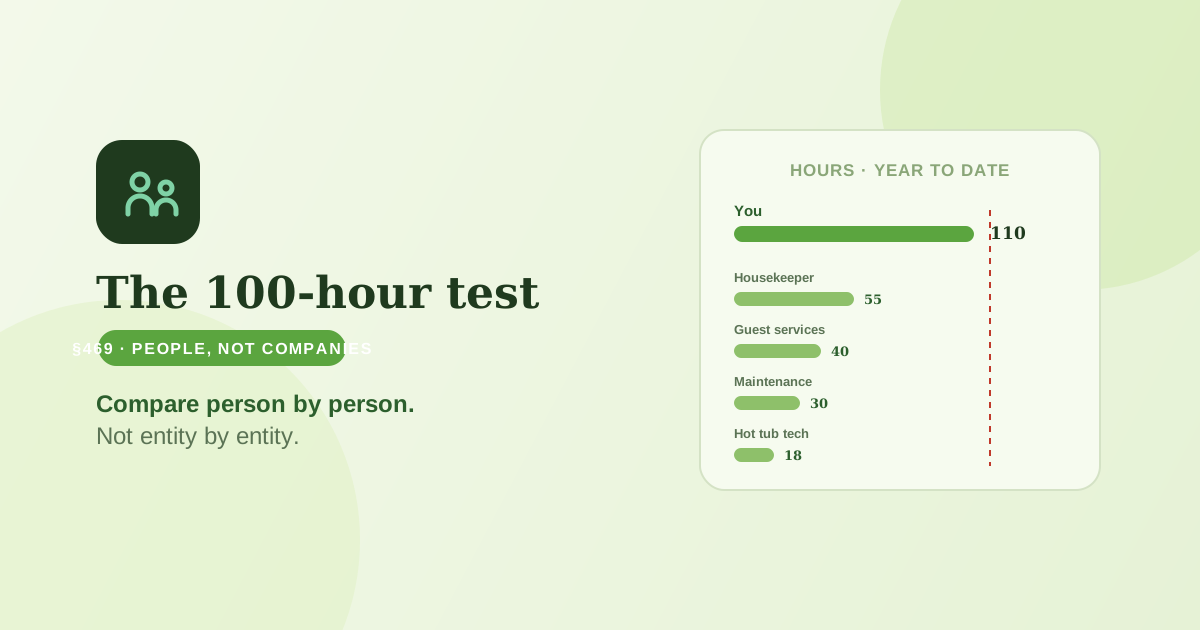
The 100-Hour Test Compares People, Not Companies
Full-service managers assume they disqualify their owners from the STR loophole. The regulation says something different — and proving it requires zero change to how you run your business.