Full-service managers assume they disqualify their owners from the STR loophole. The regulation says something different — and proving it requires zero change to how you run your business.
Tax Court judges aren't forensic accountants. They're people who've written checks and done Saturday chores—and a fake log always fails the test of ordinary life.
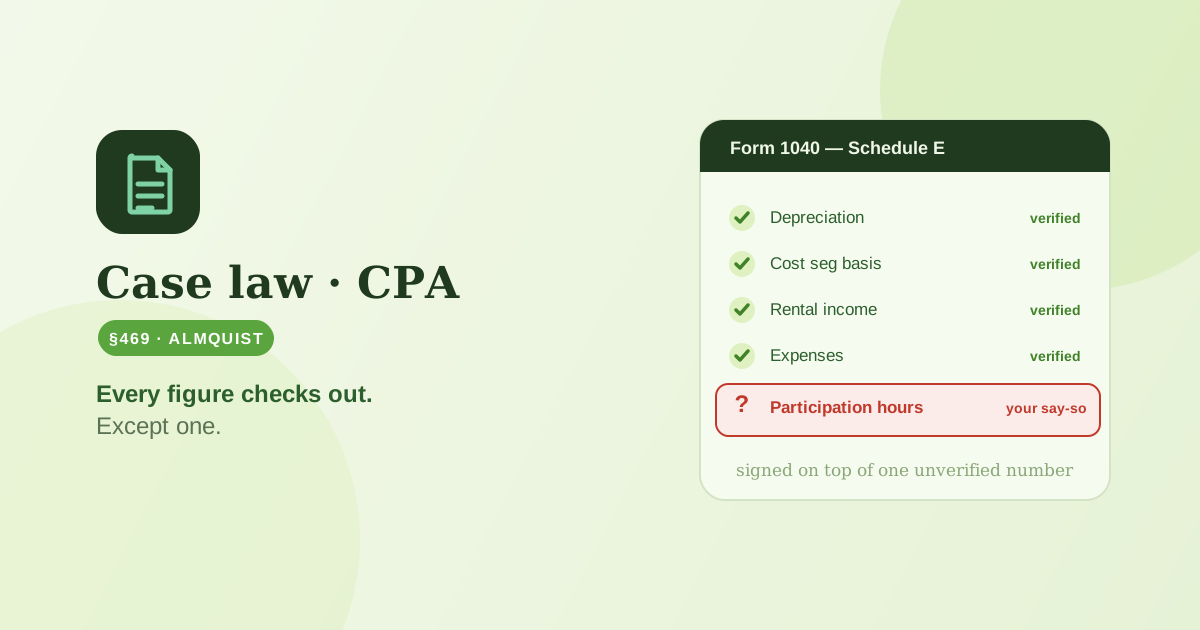
When the audit goes bad, everyone reaches for the same defense—"my accountant prepared it." The courts have heard it before, and the reason it fails should change how you keep records.
Pohoski v. Commissioner is required reading for every STR owner with a cleaner, co-host, or property manager—because the evidence that sank it was the evidence nobody kept.
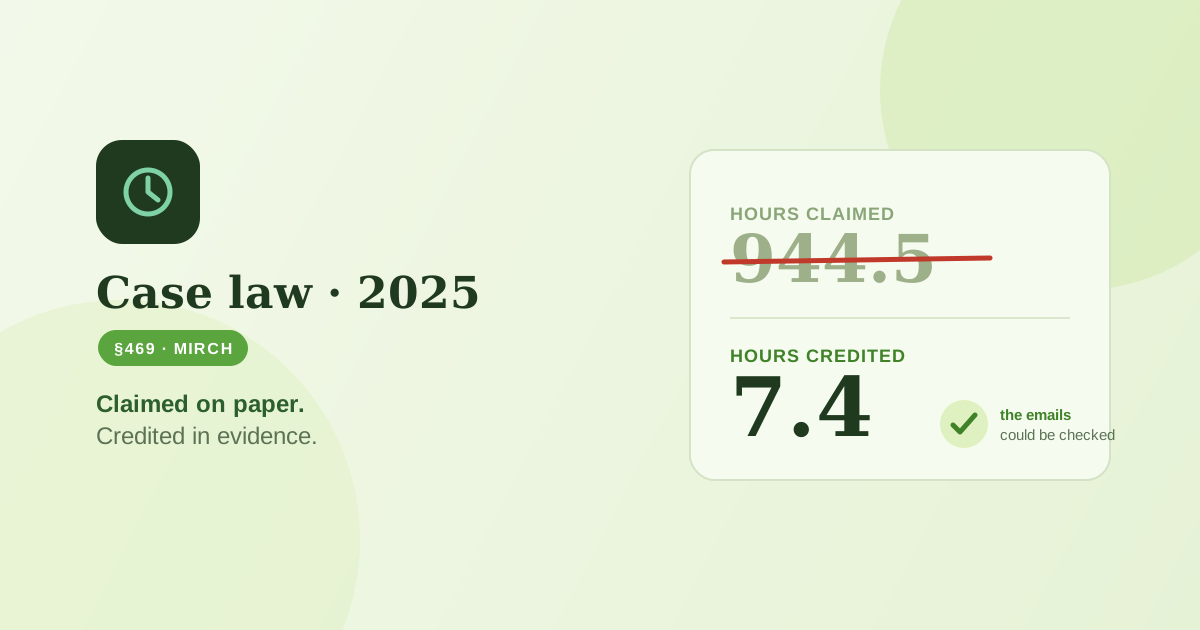
What a pair of §469 cases reveals about the evidence that actually wins a material participation fight—and the evidence that doesn't exist when you need it.
The four marks of a defensible position—contemporaneous, specific, bounded denominator, tamper-evident—and why a spreadsheet can't produce them. The series conclusion. Part 6 of the §469 Problem Series.
The best STR markets are rarely where you live, and the obvious fix—a full-service manager—can quietly destroy the whole benefit. The way through is separating labor from participation. Part 5 of the §469 Problem Series.
Under the 100-hour test your competition isn't everyone combined—it's the single person who did the most, usually the cleaner. The fix changes the denominator, and it's just good operations. Part 4 of the §469 Problem Series.

 Short Term Rentals