The 100-Hour Test Compares People, Not Companies
Full-service managers assume they disqualify their owners from the STR loophole. The regulation says something different — and proving it requires zero change to how you run your business.
The fear, stated plainly
Talk to a short-term rental manager about §469 material participation and you can watch the shutters come down. The reasoning goes something like this: If I tell my owners the truth about material participation, one of two bad things happens. Either they demand operational control back so they can log hours — and my quality standards go out the window — or they learn they can't take the deduction and go find a manager who promises they can.
Both fears are real. Both are based on a misreading of the rule.
We came at this from the operations side, not the tax side. Watching professionally managed owners claim participation they had no way to document — and watching the managers who served them stay carefully silent about it — is the reason this product exists.
What the regulation actually says
There are seven tests for material participation. For a professionally managed property, most of them are genuinely off the table.
The 500-hour test is implausible for an owner who isn't operating the property. The "substantially all" test is out by definition — you're doing the work. The facts-and-circumstances test is explicitly unavailable when any other person is compensated for managing the property, which describes every professional manager in America.
Then there's the 100-hour test. It requires two things: the owner participated more than 100 hours, and the owner's participation was not less than that of any other individual for the year.
Read that second half again. Any other individual. Not any other company. Not any other entity. The comparison runs person by person.
Your management agreement doesn't participate in the activity. Your LLC doesn't participate. Your housekeeper participates. Your maintenance tech participates. Your operations coordinator participates. Each of them is measured on their own.
Why a specialized team usually helps the owner
This is where full-service managers have it backwards.
Picture a small operator where one person handles everything on a given property — turns, repairs, guest messaging, restocking. Over a season that individual might log 180 hours on that single door. An owner would have to beat 180 hours to qualify. That's not happening.
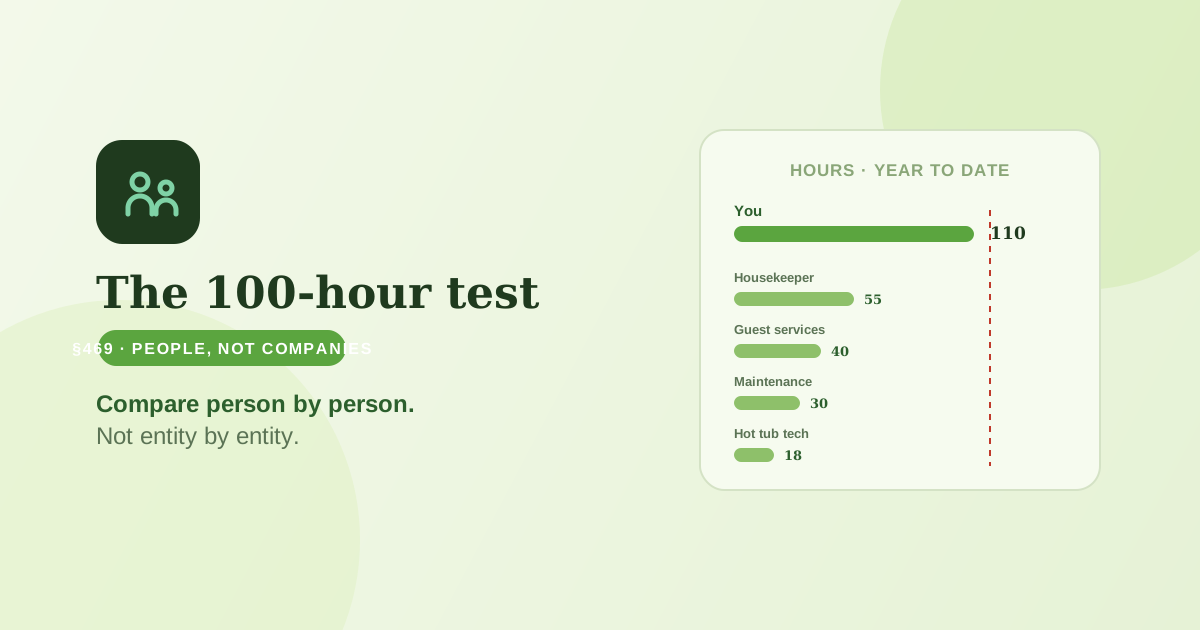
Now picture a professional shop with real division of labor. Housekeeping logs 55 hours on that property. Maintenance logs 30. The hot tub tech logs 18. The guest services coordinator logs 40. Nobody individually crosses 55. An owner with 110 well-documented hours clears the test.
Same property. Same total hours of professional service. Wildly different outcome for the owner — and the better-run operation is the one that helps.
A caution, because this is where people get clever and get hurt: this is an observation about how specialized teams actually work, not an invitation to slice up assignments on paper to manufacture a result. Hours have to reflect what genuinely happened. If a schedule looks engineered rather than operational, an examiner will notice, and the manager who built it will be the one explaining it.
The risk of doing nothing is not zero
Managers who stay quiet on this think they're staying neutral. They aren't.
Right now, some meaningful share of your owners believe they're taking the STR loophole. They heard it at a seminar or on a podcast. They're deducting losses against W-2 income. They have no contemporaneous log, no hour data, and no idea that a single individual on your team may have logged more hours on their property than they did.
When that gets examined — and the Tax Court record on this is not kind to taxpayers who reconstruct logs after the fact — the owner is going to ask one question: why didn't my property manager tell me?
Meanwhile the manager down the road is telling prospects the loophole is theirs, hands-free, no problem. That's not a competitive advantage. That's an unpriced liability sitting on someone's balance sheet.
What integration actually looks like
Here's the part that answers the fear directly. Adding participation documentation to a professional management operation changes almost nothing.
Your operations don't change. No hours get handed back. No standards get relaxed. No agreement gets renegotiated. You clean, you maintain, you message guests exactly as you do today.
Your data already exists. If you run Breezeway, Hostaway, Turno, or anything comparable, you are already recording who performed which task, on which property, on which date. That was built for scheduling and accountability. It happens to be the single hardest dataset in the entire material participation analysis, and you're the only party who has it. Owners cannot generate it. CPAs cannot reconstruct it.
It starts with a file you already know how to export. Not an API project, not an IT initiative, not something that waits for your software vendor's roadmap. You pull the task export you can already pull today, map the columns once, and you're running. A direct read-only connection is available where it makes sense, but nothing about getting started depends on it.
Nothing writes back. EvidenceGraph reads task and assignment data. It doesn't touch your calendar, doesn't push instructions to your staff, doesn't sit between you and your team.
Vendor identities stay yours. Owners see roles and hours — "Housekeeper A, 55 hours" — not your vendor roster, not your rates. You see the real names. That distinction is deliberate and it isn't negotiable.
The output is one number per property. At year end, alongside the owner statement you already send, each owner receives a Participation Baseline: in 2026, the highest single non-owner individual logged 55 hours on your property. That's the bar. It's a fact, not an opinion.
Total change to your workflow: one export, mapped once, and a line item in the year-end package.
What the owner actually sees
The owner's view is two numbers side by side, updated as the year runs:
Highest single non-owner individual, year to date: 41 hours. Your documented hours, year to date: 22 hours.
That's the entire scoreboard. No verdict. No green checkmark. No "you qualify."
This is worth being explicit about, because it's the thing a cautious manager needs to hear before connecting anything: EvidenceGraph never renders an opinion on whether an owner materially participated. Whether those two numbers add up to anything depends on the average-stay threshold, the owner's other activities, grouping elections, and a half-dozen facts the platform has no view of. The CPA reads the scoreboard and makes the call. The platform's job is to make sure there's something real to read.
The reason it runs continuously rather than arriving in December is that a year-end report is an autopsy. An owner sitting at 22 hours against a 41-hour baseline in July can still do something about it — take the vendor calls themselves, run their own pricing reviews, handle the owner-side decisions they were delegating out of habit. The same owner learning the same thing in February has no moves left.
There's a benefit to your office in that too. Owners who can see their own position continuously don't call you in March asking what happened. The annual scramble is what happens when nobody's keeping score until it's over.
The part nobody wants to say out loud
Some of your owners will not clear the bar. The honest report will tell them so.
That feels like bad news to deliver. It isn't. An owner who learns in January that they logged 40 hours against a 55-hour baseline has options — participate more deliberately next year, or stop claiming a deduction they can't defend. An owner who learns the same thing during an examination has penalties, interest, and a grievance with your name on it.
Being the manager who tells owners the truth about their documentation is a durable position. Being the manager who let them assume is not.
Your lane and the CPA's lane
This is worth stating clearly in every owner conversation.
You report facts: who worked, on what property, for how long. You do not determine whether an owner materially participated. You do not opine on whether short-term rental losses are deductible against their ordinary income. You do not tell anyone their average stay qualifies.
The CPA makes every one of those calls. Your contribution is that for the first time the CPA has real data to make it with.
That's a narrow lane, and staying inside it is what makes the whole thing safe to offer.
The short version
The 100-hour test compares individuals, not companies. Your specialized team probably helps your owners rather than hurting them. You can't prove it without per-person, per-property hour data, and you're the only one who has it. Producing it requires no operational change — just an export you already know how to run and one number on the year-end statement.
Your competitors are promising outcomes they can't document. You can document outcomes without promising anything.
Frequently asked questions
- Does the 100-hour test compare an owner against the management company?
- No. The regulation compares the owner’s participation against that of any other individual, not any other company or entity. A management agreement, an LLC, or a vendor firm does not participate — the people do. Each housekeeper, maintenance tech, and coordinator is measured on their own hours, one person at a time.
- Does using a full-service property manager disqualify the owner from the STR loophole?
- Not automatically. It closes off the 500-hour, “substantially all,” and facts-and-circumstances tests, but the 100-hour test can still be available. Under it, the owner needs more than 100 hours and no less than any single individual who worked the property — a company with real division of labor often keeps every individual’s hours below the owner’s.
- Why does a specialized team help the owner more than a solo operator?
- Because the test compares individuals. If one person does turns, repairs, messaging, and restocking on a property, they might log 180 hours — a bar the owner can’t beat. Split the same work across a housekeeper (55), maintenance (30), hot tub tech (18), and coordinator (40) and no single person crosses 55, so an owner with 110 documented hours can clear it. The hours must reflect what genuinely happened, not an assignment split engineered on paper.
- Does connecting our task data to a documentation platform create liability for us as the manager?
- No — you are reporting facts that already exist in your scheduling system. Liability attaches to opinions about tax outcomes, not to accurate records of who cleaned which unit and when. The real exposure runs the other direction: managers who let owners assume they qualify for material participation, with no data behind it, are the ones holding an unpriced risk.
- Are we giving tax advice by providing hour data to owners?
- No, as long as the lane stays narrow. Reporting hours worked is bookkeeping. Determining material participation, whether the average-stay threshold is met, or whether losses are deductible against ordinary income is the CPA’s determination. The report should state its own limits on its face, and it does.
- Do independent contractor hours count against the owner under the 100-hour test?
- Yes. The regulation compares individuals and does not distinguish between an employee and a contractor. A 1099 cleaner’s hours count exactly the same as a W-2 cleaner’s. This matters more than most managers expect, because contractor hours are frequently the ones nobody is tracking carefully.
- Does a grouping election change any of this?
- It can, and that determination belongs to the CPA. Grouping can aggregate activities in ways that change which hours get compared against what. The per-property, per-person data remains useful under any grouping posture — it simply gets analyzed differently. What does not change is that the data has to exist before anyone can analyze it.
- What should an owner do if they are below the baseline?
- They have two honest options: participate more deliberately and contemporaneously going forward, or stop claiming the deduction. There is no third option where they claim it and hope nobody looks. Learning this in January leaves room to act; learning it during an examination does not.
Related posts
 Material Participation
Your Cleaner Might Be Disqualifying You
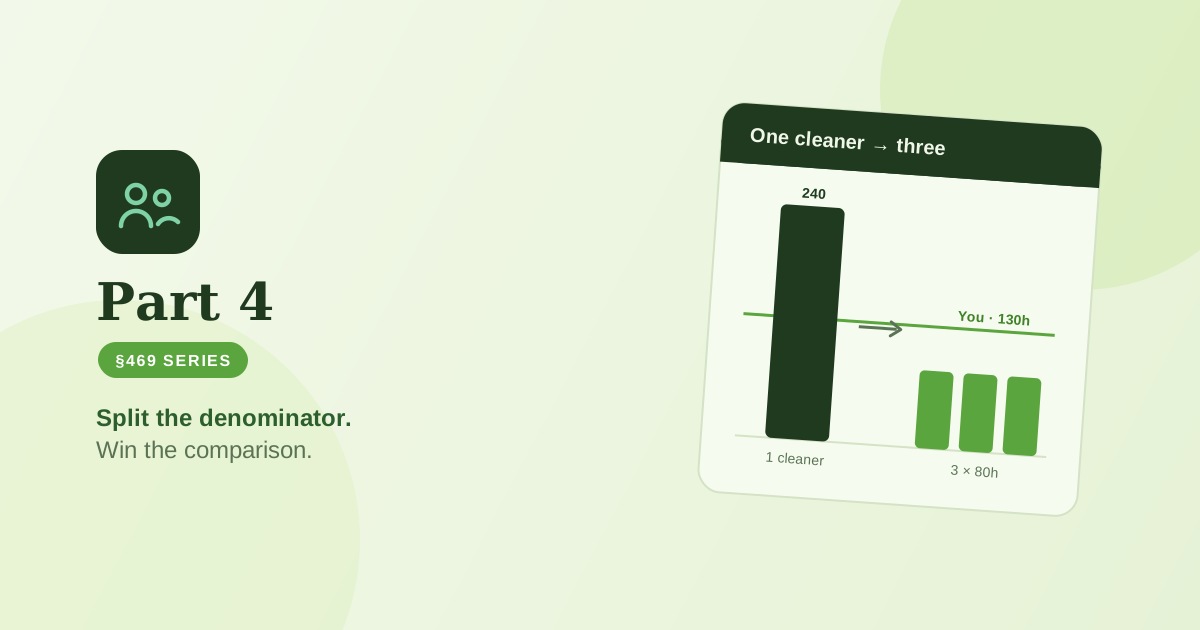
Under the 100-hour test your competition isn't everyone combined—it's the single person who did the most, usually the cleaner. The fix changes the denominator, and it's just good operations. Part 4 of the §469 Problem Series.
 Short Term Rentals
Hiring a Property Manager Didn't Cost These Taxpayers Their Deductions. Failing to Track the Manager's Hours Did.
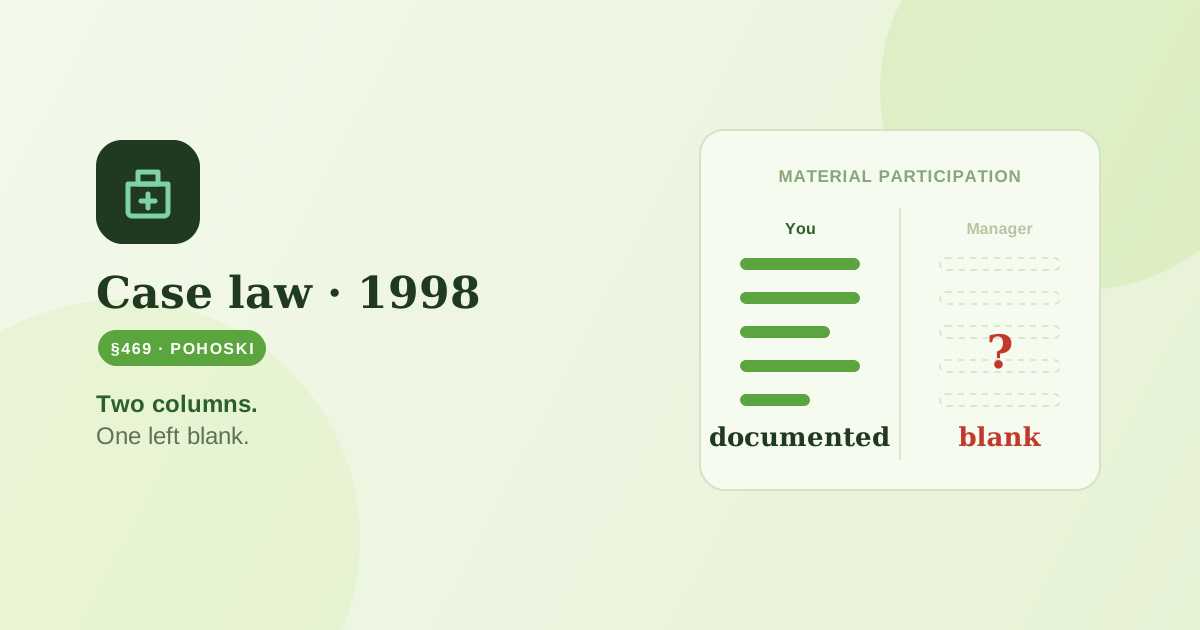
Pohoski v. Commissioner is required reading for every STR owner with a cleaner, co-host, or property manager—because the evidence that sank it was the evidence nobody kept.
 Material Participation
Material Participation Is Not a Vibe — It's an Hours Test You Have to Win
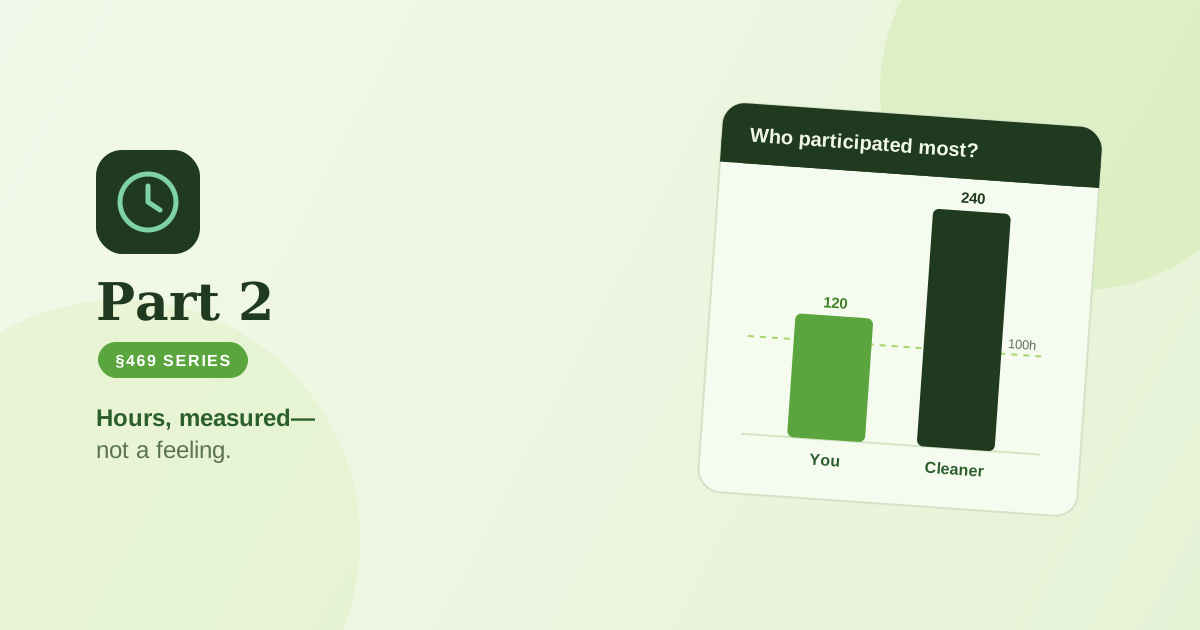
There are seven ways to qualify, but three matter for STR owners—and the popular 100-hour test has a trap that disqualifies well-meaning owners. Part 2 of the §469 Problem Series.