Your CPA Signs Your Return Based on One Number They Can't Verify.
When the audit goes bad, everyone reaches for the same defense—"my accountant prepared it." The courts have heard it before, and the reason it fails should change how you keep records.
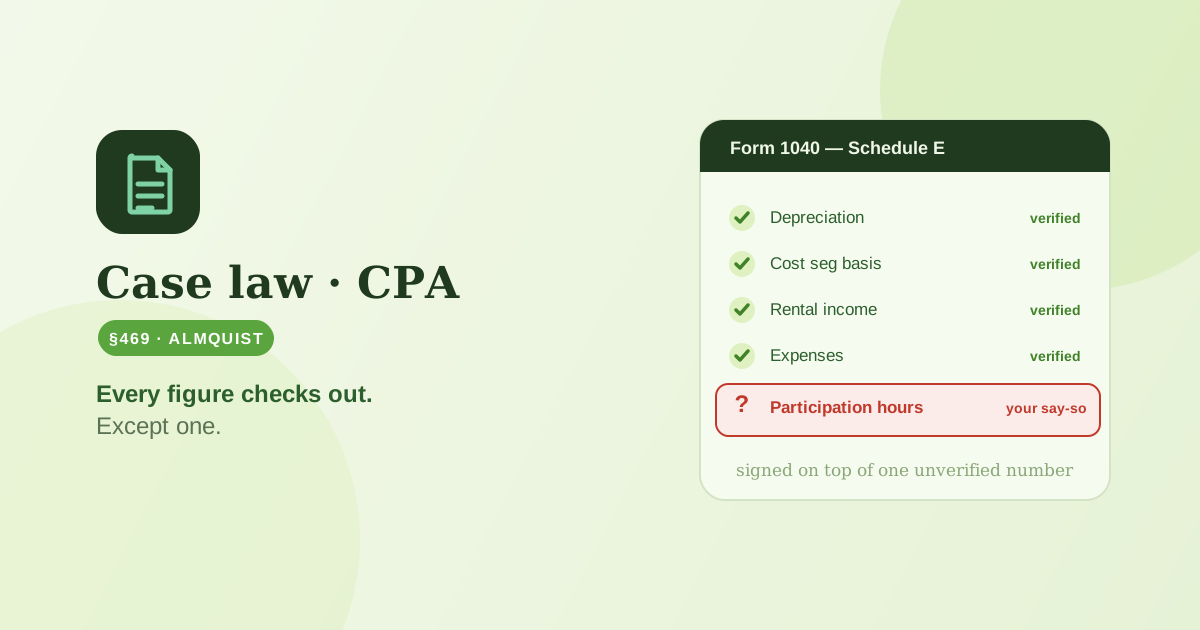
Picture your CPA at signing time. They've reconciled your depreciation schedule, run your cost seg numbers, structured the return. Every figure on it traces to a document — except one. Your material participation hours came from a single source they cannot audit: you. They asked, you answered, and their signature now sits on top of your answer.
Most STR investors think of that arrangement as protection. If the IRS ever disagrees, the reasoning goes, a professional prepared this return — surely that's a shield. Tax Court has been dismantling that assumption for years, and Almquist v. Commissioner shows the mechanics of how it fails.
The defense that backfired
The Almquists lost their material participation case on a reconstructed calendar — hours rebuilt from cryptic notebook entries about a year after the fact, dismissed by the court as a "ballpark guesstimate." Then the IRS asserted the 20% accuracy-related penalty, and the taxpayers deployed the defense: our accountant prepared the return. The court's response is the part every investor should memorize. The accountant had relied on the taxpayers for an accurate representation of the hours worked. When the taxpayers couldn't prove those hours, there was nothing behind the preparer's numbers — and nothing reasonable about the reliance. The penalty stuck.
Which way does the trust actually run?
Understand what the court is saying about the direction of trust. Reliance on a professional protects you when the professional exercised judgment on information you accurately supplied. Your hours aren't that. Your CPA doesn't calculate your hours — they transcribe them. The judgment on the return is downstream of your log, which means when your log is fiction, you didn't rely on your CPA at all. Your CPA relied on you. The bus you're trying to throw them under backs up and parks on your penalty defense.
The preparer is exposed too
Now flip to the preparer's chair, because their exposure is real too. Preparers face their own penalty regime and professional standards for positions taken without reasonable basis. The good ones — the ones you want signing your return — know this, which is why they've been asking you for a contemporaneous log every year, and why the answer they usually get back is a March spreadsheet built from memory. They can't verify it. They can't refuse every client who lacks one. So they sign, exposed, hoping you never get the letter.
That's the quiet truth of this whole area: the taxpayer and the preparer are locked in mutual reliance on a record that usually doesn't exist. You're counting on their signature; they're counting on your log; and when the examiner asks for it, both of you find out at the same time what it was worth.
Remove the need for a defense
The fix isn't a better defense — it's removing the need for one. Hours anchored to system-generated, third-party-corroborated records change the entire equation: your CPA is no longer transcribing your memory, they're incorporating evidence. Every recorded management call — timestamped, exact duration, vendor on the line — is a data point your preparer can actually stand behind. EvidenceGraph compiles those calls into the audit-ready file your CPA has been asking you for every February, built automatically while you worked.
You can't throw your CPA under the bus — the courts won't let you. And your CPA can't save you — your records won't let them. The only person who can protect both of you is you, at the moment the work happens.
EvidenceGraph provides documentation tools, not tax or legal advice. Consult your CPA or tax attorney regarding your specific situation.
Frequently asked questions
- If my CPA prepared my return, am I protected from IRS penalties?
- Not for material participation hours. Reliance on a preparer protects you when the preparer exercised professional judgment on accurate information you supplied — but your hours come from you, not from their judgment. In Almquist v. Commissioner, the reliance defense failed and a 20% accuracy penalty stuck, because the accountant had simply relied on the taxpayers’ own unproven hours.
- Why did the “my accountant prepared it” defense fail in Almquist?
- Because the direction of reliance was backwards. The accountant relied on the taxpayers for an accurate representation of hours worked; when the taxpayers couldn’t substantiate those hours, there was no professional judgment to reasonably rely on. The court disallowed the losses and upheld the §6662(a) penalty.
- Can my CPA verify my material participation hours?
- No — and that’s the structural problem. Your CPA can verify depreciation, basis, and income against documents, but your hours have a single source: you. Unless your log is anchored to independent records like call logs, invoices, or booking data, your preparer is transcribing your memory, not incorporating evidence.
- Is my tax preparer at risk if my time log fails?
- Preparers face their own penalty exposure and professional standards for return positions lacking reasonable basis. That’s why diligent CPAs push clients for contemporaneous logs — an unsupported hours claim puts their signature at risk alongside your deduction.
- What should I give my CPA to support my participation hours?
- Contemporaneous records tied to independently verifiable evidence: call records with dates and durations, vendor invoices, booking and messaging data, and a running log that cross-references them. That converts your hours from an unverifiable representation into documentation your preparer can defensibly rely on.
- How do recorded phone calls change what my CPA can sign?
- A recorded management call carries a system-generated timestamp, an exact duration, and a third party on the line — evidence that exists independently of your say-so. A year of those calls, compiled into an audit-ready file, gives your preparer verifiable support for the hours on the return instead of a March spreadsheet built from memory.
Related posts
 Audit Defense
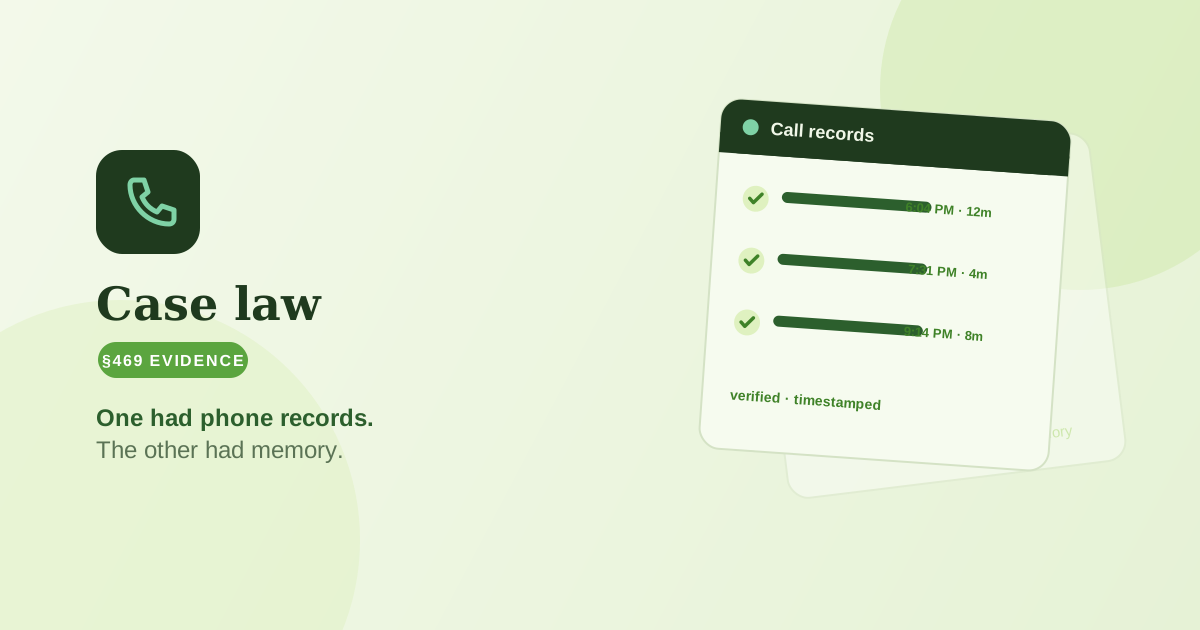
Two Taxpayers Walked Into Tax Court. Only One Had Phone Records.
What a pair of §469 cases reveals about the evidence that actually wins a material participation fight—and the evidence that doesn't exist when you need it.
 Audit Defense
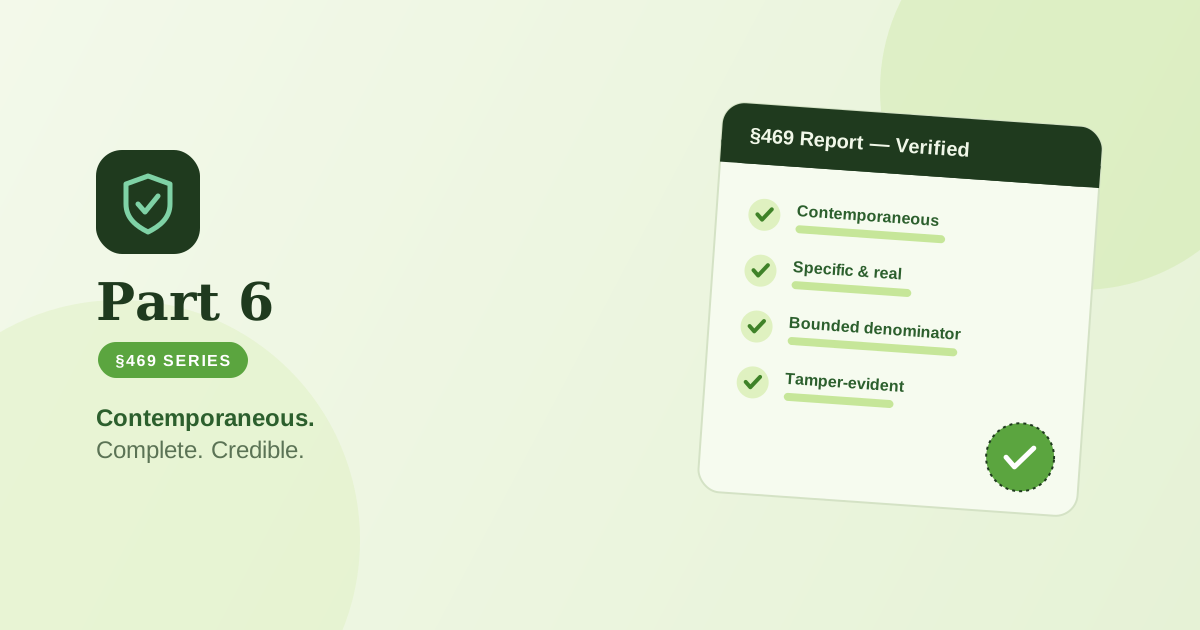
What Audit-Defensible Actually Looks Like
The four marks of a defensible position—contemporaneous, specific, bounded denominator, tamper-evident—and why a spreadsheet can't produce them. The series conclusion. Part 6 of the §469 Problem Series.
 Recordkeeping
The Hours You Didn't Log Are the Hours You Didn't Work
Two owners, identical work, identical hours—but one kept a contemporaneous log and one reconstructed it in April. In a substantiation fight they are not in the same place. Part 3 of the §469 Problem Series.