Two Attorneys Claimed 944 Hours on Their Airbnb. The Tax Court Did the Math.
Mirch v. Commissioner (T.C. Memo. 2025-128) is the freshest warning in the case law—and it torched the exact logging method most STR owners use.
Two practicing attorneys against an IRS examiner. Who's your money on?
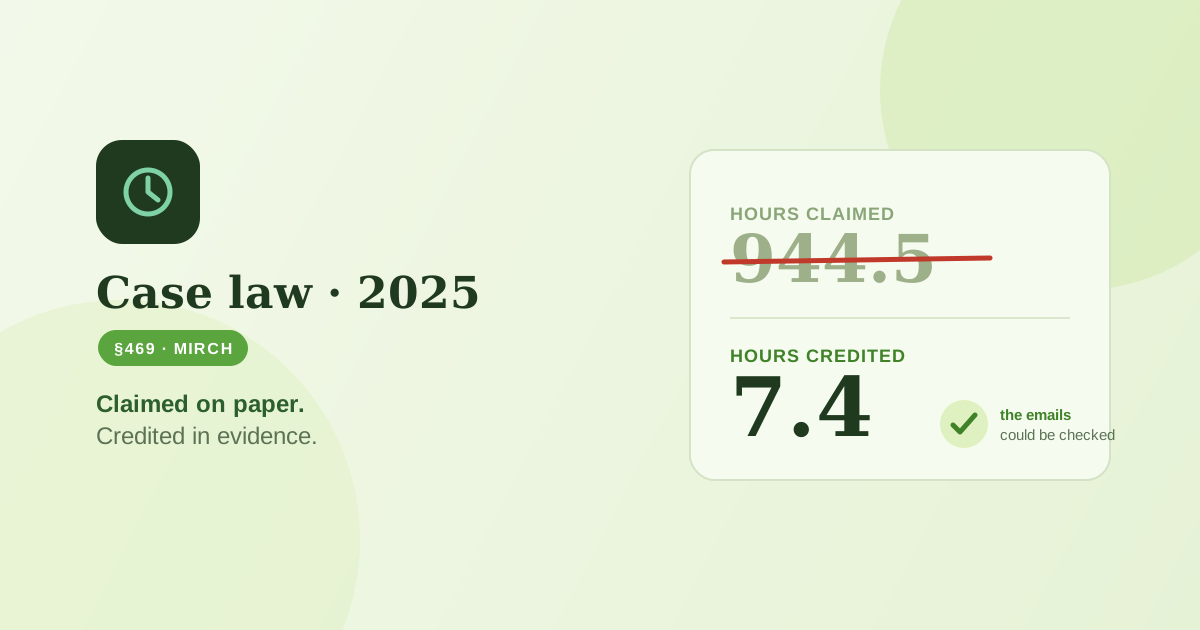
Most people would take the attorneys. These weren't taxpayers fumbling through Publication 925 — the Mirches ran a law firm in Reno. They understood burden of proof, evidence, and substantiation for a living. When they claimed material participation in their short-term rental, they backed it with a log showing 944.5 hours for the year — enough to clear every threshold in §469 with room to spare.
The court credited 7.4.
Not 7.4 hundred. Seven point four hours — out of nearly a thousand claimed. If you want to understand what actually wins these cases, that ratio is the whole story, because the difference between the hours that survived and the hours that died had nothing to do with legal skill. It had to do with what stood behind them.
The method was the problem
The problem was the method. Instead of recording actual work as it happened, the log assigned standardized time estimates to categories of tasks — the same number of hours for every occurrence, regardless of what actually occurred. The centerpiece was "site management": 8 hours for each of the 93 days the property was rented, defined as being "on call for guests, repairs, supplies, Wi-Fi, cable, snow removal." That single category was 744 hours — nearly 80% of the claim.
The court rejected all of it. Being available is not participating. The regulations require identifying the actual services performed and the approximate time spent performing them — and "I was on call" identifies neither. The court acknowledged the wife probably did answer guest questions and coordinate repairs during those stays. It didn't matter. Hours you can't tie to actual work performed are hours you don't have.
When your own return testifies against you
The cleaning category collapsed the same way. The log claimed 7 hours of cleaning per stay — every stay, whether the guest was there one night or fourteen. Meanwhile, the taxpayers' own return deducted nearly $10,000 in professional cleaning services, and they charged guests a separate $85 cleaning fee. Their own economic evidence testified against their time log. The court called the 168-hour cleaning claim a post-event ballpark estimate and credited essentially none of it.
The 7.4 hours that survived
Here's where the 7.4 came from: one category in the log did survive. The email hours — 12 minutes to read, 12 minutes to send — were found reasonable, because the court could check them against evidence showing the actual emails exchanged with prospective tenants. A grand total of 7.4 hours held up. The only hours that survived were the ones anchored to records that existed independently of the taxpayers' say-so.
Estimates versus evidence
That's the entire lesson of Mirch in one sentence: the court didn't grade the log on effort or plausibility — it graded each claimed hour on whether something verifiable stood behind it. Uniform estimates fail because real work doesn't happen in identical increments, and a log that says it does reads as reconstruction, not record. What survives is specific, contemporaneous, and corroborated: this call, this date, this duration, this vendor.
So the answer to the bet is that it was never attorneys v. IRS at all. It was estimates v. evidence, and evidence is undefeated.
Which is exactly what your phone already generates every time you coordinate a cleaner, chase a Wi-Fi outage, or schedule the snow removal the Mirch log could only gesture at. The work was real. The evidence wasn't. EvidenceGraph exists to close that gap — every management call recorded, transcribed, and time-stamped as it happens, so the record accrues while you work instead of being reverse-engineered when the letter arrives.
The Mirches had 944.5 hours on paper and about 7.4 in evidence. Don't let that ratio be yours.
EvidenceGraph provides documentation tools, not tax or legal advice. Consult your CPA or tax attorney regarding your specific situation.
Frequently asked questions
- If trained attorneys lost their material participation case, what chance does a regular STR owner have?
- A better one than the Mirches — if you keep the right evidence. The attorneys in Mirch v. Commissioner didn’t lose on legal skill; they lost on records. The court credited the one category of hours backed by verifiable evidence and rejected everything built on estimates. The winner in these cases isn’t whoever argues best — it’s whoever walks in with contemporaneous, corroborated records.
- Does being “on call” for my rental count toward material participation?
- No. The Tax Court in Mirch rejected 744 hours of “site management” defined as being on call for guests and repairs. Only actual services performed count — you must identify the work done and the approximate time it took. Availability is not participation.
- Can I use standard time estimates in my log, like a set number of hours per guest stay?
- It’s one of the fastest ways to lose. The Mirch log assigned 7 hours of cleaning to every stay — one night or fourteen — and 8 hours of management to every rental day. The court called the method “far from reasonable” and rejected the hours. Real work doesn’t happen in identical increments, and a log that says it does reads as reconstruction, not record.
- Can my own tax return be used against my time log?
- Yes. The Mirches claimed 168 hours of personal cleaning while deducting nearly $10,000 for professional cleaning services and charging guests an $85 cleaning fee. The court weighed that economic evidence against the log and concluded they did minimal cleaning themselves. Your hours claim has to square with the rest of your return.
- Which hours actually survived in Mirch — and why?
- About 7.4 hours out of 944.5 claimed: the email time. The court accepted 12-minute allocations per email because the actual emails existed and could be checked. That’s the standard in one line — hours anchored to independently verifiable records survive; hours resting on the taxpayer’s say-so don’t.
- What’s the safest way to document short-term rental hours after Mirch?
- Record work as it happens, tied to something verifiable — call records, messages, invoices, booking data. Courts consistently credit contemporaneous records with system-generated timestamps and third-party corroboration, and consistently reject after-the-fact estimates. A recorded, time-stamped call with a vendor is the Mirch email standard applied to every task you do by phone.
Related posts
 Audit Defense
Two Taxpayers Walked Into Tax Court. Only One Had Phone Records.
What a pair of §469 cases reveals about the evidence that actually wins a material participation fight—and the evidence that doesn't exist when you need it.
 Material Participation
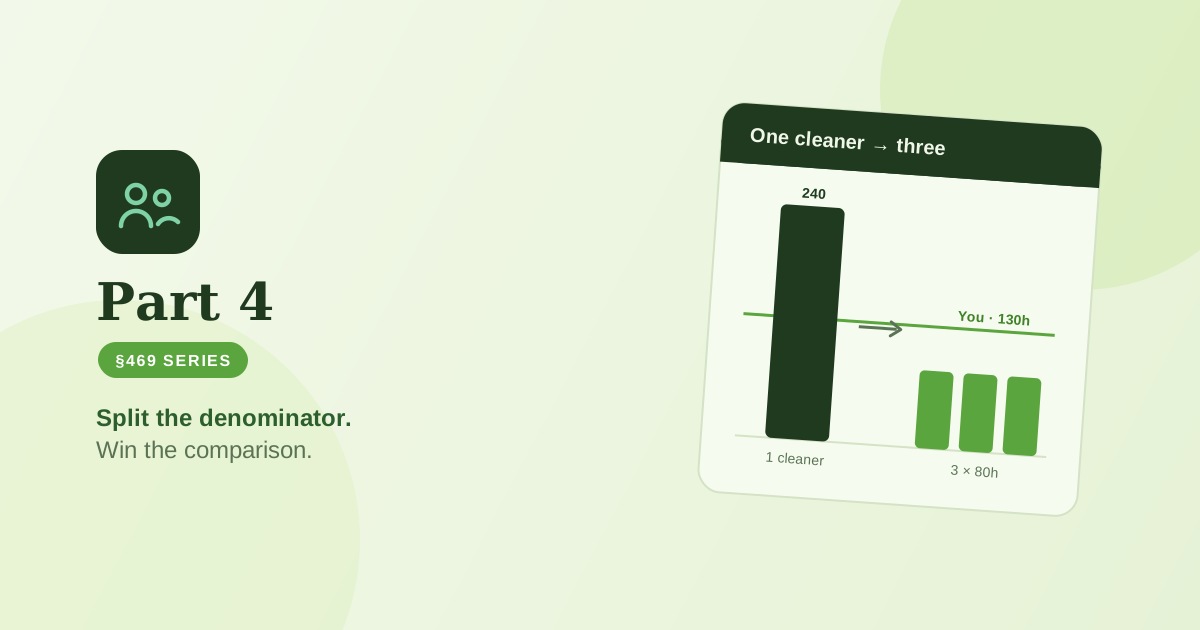
Your Cleaner Might Be Disqualifying You
Under the 100-hour test your competition isn't everyone combined—it's the single person who did the most, usually the cleaner. The fix changes the denominator, and it's just good operations. Part 4 of the §469 Problem Series.
 Recordkeeping
The Hours You Didn't Log Are the Hours You Didn't Work
Two owners, identical work, identical hours—but one kept a contemporaneous log and one reconstructed it in April. In a substantiation fight they are not in the same place. Part 3 of the §469 Problem Series.