Hiring a Property Manager Didn't Cost These Taxpayers Their Deductions. Failing to Track the Manager's Hours Did.
Pohoski v. Commissioner is required reading for every STR owner with a cleaner, co-host, or property manager—because the evidence that sank it was the evidence nobody kept.

Every STR investor has heard the warning: use a property manager and you can kiss the tax loophole goodbye. Pohoski v. Commissioner (T.C. Memo 1998-17) — the case that warning supposedly comes from — says something different, and more useful. The taxpayers didn't lose because they hired help. They lost because of what they couldn't show about the help they hired.
Most material participation cases die the same way: the taxpayer can't prove their own hours. Pohoski is the exception worth studying, because these taxpayers lost on a different blank in the record — the hours of the people they paid.
The scoreboard has two columns
Here's why that blank was fatal. Two of the most-used participation tests are comparative by design. Test 2 asks whether your participation was substantially all the participation in the activity — everyone's, including non-owners. Test 3 asks whether you put in more than 100 hours and at least as much as any other individual. Material participation, under these tests, is a two-column scoreboard: your hours and theirs. The Pohoskis showed up with one column blank — and the blank column lost.
The court's reasoning was blunt. The taxpayers failed "to put forth some indication of the actual time spent by" the third parties working on the property. The court didn't rule that using a management company disqualified them. It ruled that with no evidence of the company's hours, the comparative test simply couldn't be satisfied. No second number, no comparison; no comparison, no win.
The door the court left open
Here's the part most write-ups skip: the court left the door open. It signaled it would have entertained proof that the taxpayers substantially participated as compared to the property management company. The comparison was winnable. Nobody brought the evidence to make it.
Two rules that fall out of this case
Two practical rules fall out of this case. First, if you use any hired help — cleaner, handyman, co-host, manager — their time is now part of your tax evidence, and you need some record of it: invoices showing time on site, monthly management reports, a year-end visit summary from your cleaning service. Second, remember the comparison under Test 3 is against each individual separately, not everyone combined. A cleaner at 80 hours and a handyman at 40 means you need to beat 80, not 120. That distinction has saved cases — but only for taxpayers who could document the split.
The risk runs backwards from what owners think
This is where the conventional wisdom gets the risk exactly backwards. Owners worry that evidence of their manager's involvement hurts them. Pohoski says the opposite: the absence of that evidence is what kills the case. Every call with your manager or vendor is a two-sided record — a timestamped log of your participation, and a documented window into theirs. You on the line, directing the work, deciding the repair, approving the expense. That's the second column of the scoreboard, filling itself in.
EvidenceGraph was built to keep that record without asking you to become a bookkeeper. A dedicated number per property; every management call recorded, transcribed, and time-stamped; every decision extracted into an audit-ready file. The Tax Court told STR owners exactly how to win with a property manager — in 1998. Twenty-eight years later, most owners still walk in with half the scoreboard blank.
EvidenceGraph provides documentation tools, not tax or legal advice. Consult your CPA or tax attorney regarding your specific situation.
Frequently asked questions
- Does hiring a property manager disqualify me from the short-term rental tax loophole?
- No — but it raises your evidence burden. In Pohoski v. Commissioner, the Tax Court didn’t rule that using a management company disqualified the taxpayers; it ruled against them because they offered no evidence of the company’s hours to compare against their own. The court signaled it would have entertained proof that the owners substantially participated as compared to the manager.
- Why did the taxpayers in Pohoski lose their case?
- They failed to show the hours worked by the third parties on the property. The most-used participation tests are comparative — your hours versus everyone else’s — and the taxpayers produced only one side of the comparison. With no record of the management company’s time, the tests couldn’t be satisfied.
- Do I have to track my cleaner’s and contractor’s hours too?
- Yes, if you’re relying on a comparative test. Under Test 3, you must show more than 100 hours and at least as much participation as any other individual. If you don’t know their hours, you can’t prove you beat them. Invoices showing time on site, management reports, and vendor summaries all serve as evidence.
- Under the 100-hour test, do I compare my hours against everyone combined?
- No — against each individual separately. If your cleaner worked 80 hours and your handyman 40, you need to exceed 80, not 120. The regulation reads “any other individual,” and courts apply it person by person. But you can only use that distinction if you can document each person’s hours separately.
- What records prove other people’s time on my rental?
- Contractor invoices showing dates and time on site, monthly property management reports, cleaning service visit summaries, and — strongest of all — records of your calls directing their work. A recorded, time-stamped call documents both sides at once: your participation and a window into theirs.
- How do recorded phone calls help with the property manager problem?
- Every call with a manager or vendor is a two-sided record: a timestamped log of your hours and evidence of who made the decisions. Pohoski failed for lack of exactly this comparison. A library of recorded management calls is the proof the court said it would have entertained — accumulated automatically, as the work happens.
Related posts
 Material Participation
Your Cleaner Might Be Disqualifying You
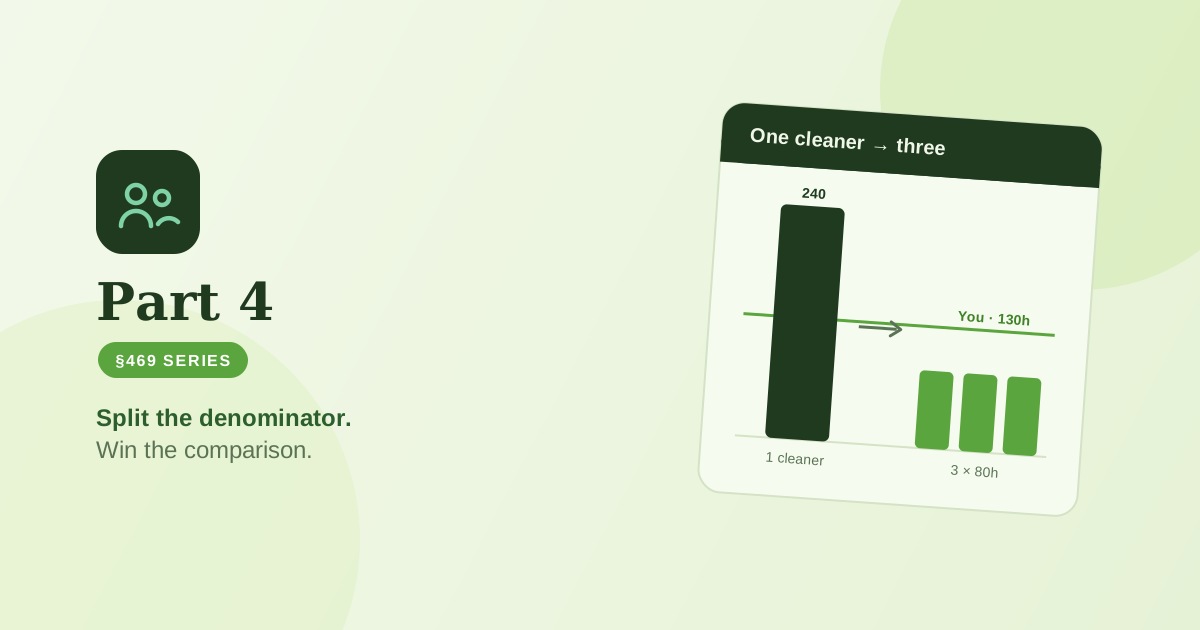
Under the 100-hour test your competition isn't everyone combined—it's the single person who did the most, usually the cleaner. The fix changes the denominator, and it's just good operations. Part 4 of the §469 Problem Series.
 Short Term Rentals
Two Attorneys Claimed 944 Hours on Their Airbnb. The Tax Court Did the Math.
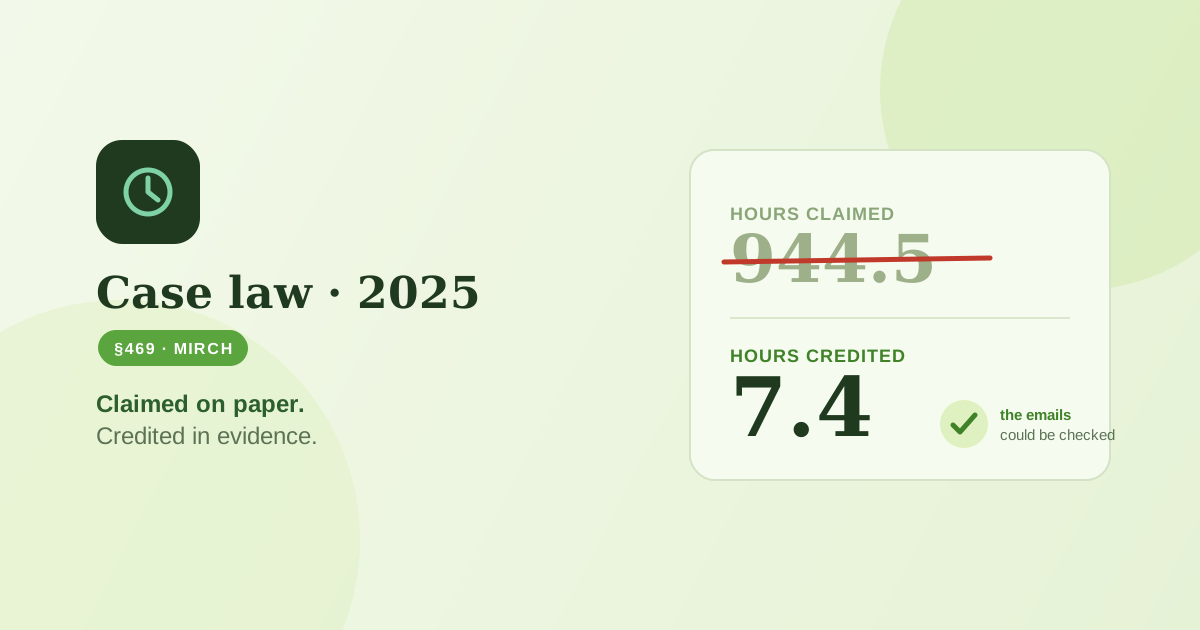
Mirch v. Commissioner (T.C. Memo. 2025-128) is the freshest warning in the case law—and it torched the exact logging method most STR owners use.
 Audit Defense
Two Taxpayers Walked Into Tax Court. Only One Had Phone Records.
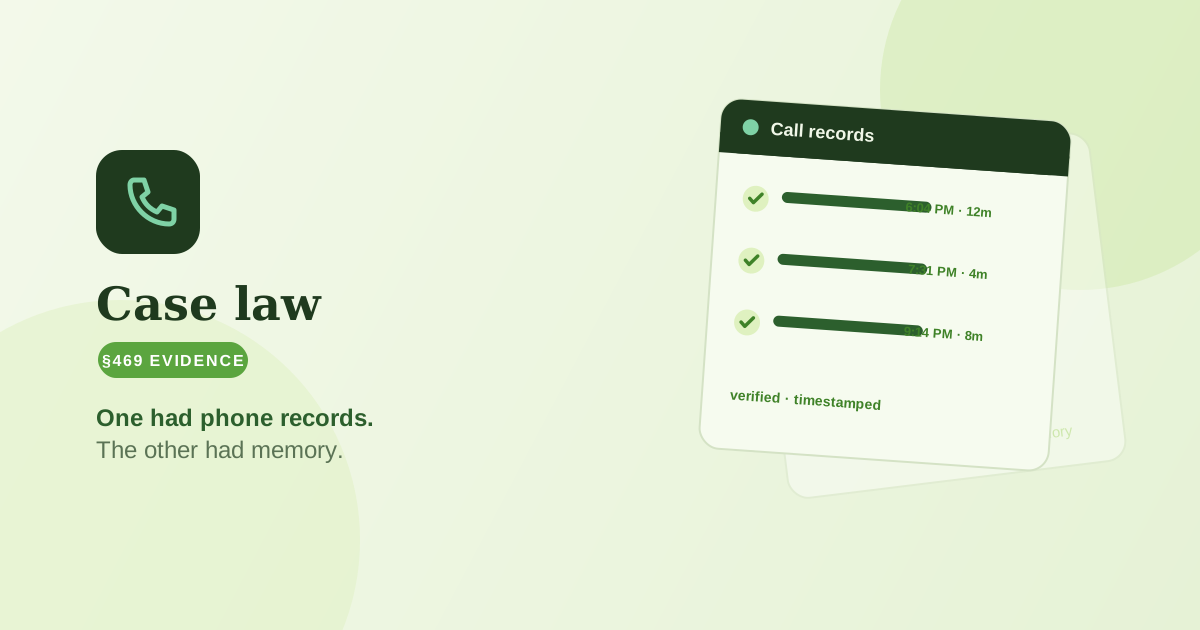
What a pair of §469 cases reveals about the evidence that actually wins a material participation fight—and the evidence that doesn't exist when you need it.